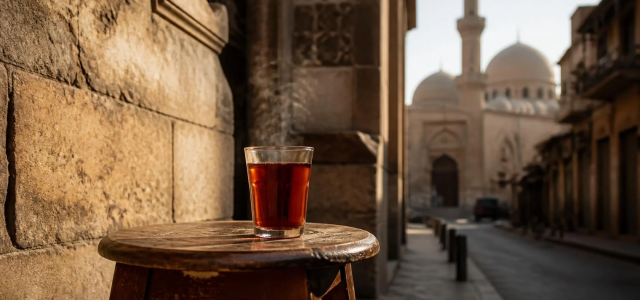
A friend of mine once described her first I’tikaf in one sentence. “I’d never been so bored and so full at the same time.” She had packed three novels, a thermos, and a lot of ambition. By day four the novels were untouched and she was just sitting against a pillar listening to someone recite, completely at peace, which annoyed her a little because she’d planned to be productive.
That mix is I’tikaf. It’s a retreat, but not the glamorous kind.
What it means
I’tikaf comes from an Arabic word meaning to cling to something, to stay put with devotion. In Islamic practice it means staying in a mosque for a set period, setting the world aside for worship, Quran, dhikr and dua. It’s mentioned in Surah Al-Baqarah, in the same passage that covers fasting, so the connection to Ramadan was baked in from the start.
When people do it
The famous time is the last ten days of Ramadan. The Prophet, peace be upon him, did it every Ramadan until he passed away, as reported in Bukhari and Muslim, and the year before he died he did twenty days. After him, his wives kept the practice.
The point of those last ten nights is Laylat al-Qadr, the Night of Power, which falls somewhere in them, in the odd nights according to many reports. The Prophet used to tighten his waist wrapper, stay awake at night and wake his family, said Aisha. That’s the energy of those last ten days.
You can also do I’tikaf outside Ramadan, as a voluntary act. Scholars differ on the minimum length, from a short period to a full day, so ask someone you trust where you live.
How it works in practice
You stay in the mosque. That’s the rule. Men do it in a mosque where congregational prayer is held, and scholars generally say women can too, in a mosque, with the same conditions of suitable arrangements and their guardians’ permission.
You step out only for what you need, such as the bathroom, wudu or a necessary errand, and you don’t make unnecessary visits or small talk in the doorway. Eating and sleeping happen inside, in the corner you’ve claimed. A thin mattress, a blanket, a small bag. People bring far too much stuff the first year.
Worldly talk and trivial arguments shrink a lot, which people tend to like once they’ve gotten over the shock.
What actually goes on
Tarawih with the congregation, extra prayer at night, Quran in whatever amounts you can manage, dhikr, quiet dua, and a lot of sitting. Some people finish the Quran. Others read one page and spend an hour on it. Both seem fine, and I’ve never heard of a scholar who graded the quality of anyone’s boredom.
One rule worth knowing. You break I’tikaf if you leave without a valid reason, and you shouldn’t be intimate with your spouse during it, which the Quran states directly. Beyond that, ask a teacher about the details of your school of thought, because they do vary.
What I’d say to first-timers
Don’t try the full ten days if you’ve never done it. Try a weekend, or do the final three nights. A lot of people burn out by night five and leave deflated.
Make your phone dumb. Not off, necessarily, but dumb. Delete the apps you’d open without thinking. Tell your boss and your family beforehand so nobody’s panicking.
And plan your food. Suhoor and iftar in a mosque are usually communal, which is lovely, but have a backup.
Doing it in Cairo
Cairo mosques fill up on the last ten nights, and some, like the area around Al-Azhar, have a particular energy that’s hard to describe if you haven’t felt it. If you’re planning a Ramadan in Egypt and want to prepare ahead, our guide to the month of Sha’ban covers how to start building the habits early.
Some of the best I’tikaf time is spent with Quran you can actually read, so it’s worth looking at our Qur’an Intensive program before the month arrives.
Conclusion
My friend did finish one thing, by the way. On the last morning she picked up the third novel, read two pages, and put it back down. She told me she preferred her own thoughts, which she’d never admitted before. If you want to spend Ramadan in Egypt with proper Arabic and Quran study behind you, come and see us at Studio Arabiya.
FAQs
Can women do I’tikaf? Yes. The wives of the Prophet kept it after he passed away. Scholars say a woman can observe it in a mosque, with her guardian’s permission and a suitable private arrangement. Some schools allow it in other settings, so ask a trusted teacher.
How long does I’tikaf have to be? It depends on the school. For the last ten days of Ramadan you stay the whole ten. For voluntary I’tikaf, opinions range from a short stay to a full day, so ask a scholar. Many beginners start with a weekend.
Can I use my phone or work during I’tikaf? Keep it minimal. The whole point is stepping away, so scrolling and working defeat it. Most scholars allow what’s necessary, like a short call to family. Agree things with your boss and family before you go in.