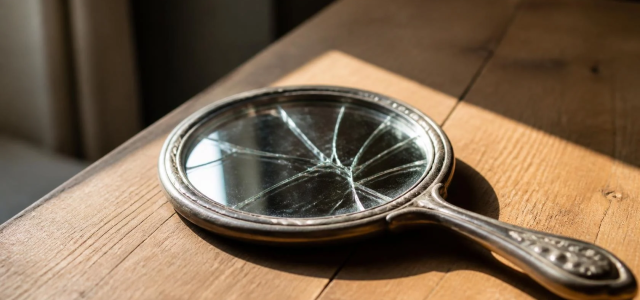
I once watched a man correct a stranger’s Arabic on the metro. Politely, kind of. The stranger had said a word with a slightly wrong vowel, and the man leaned over and fixed it, and the stranger said thanks, and I could see the man’s whole posture change. He’d just been right in public. He sat a little straighter for three stops.
I’m not telling this to mock him. I’d have done the same thing, and enjoyed it. That’s kibr, in its smallest and most ordinary form.
What kibr means
Kibr is pride or arrogance. The word comes from the root for big. It’s feeling bigger than you are, in front of Allah or in front of people. The Prophet, peace be upon him, defined it in a hadith in Sahih Muslim as rejecting the truth and looking down on people.
Two parts. Rejecting truth, meaning you won’t accept something because of who said it, or because accepting it would mean you were wrong. And looking down on people, which is just what it sounds like.
Notice what isn’t in the definition. Nice clothes, a good car, being happy about your work. A man asked the Prophet about liking his clothes and shoes to look good, and the Prophet said Allah is beautiful and loves beauty. That’s not kibr. Kibr lives in the heart, in how you see other people.
How serious is it?
Serious. In the same hadith in Muslim, the Prophet says that nobody who has even an atom’s weight of pride in his heart will enter paradise. When a Companion asked, but what about someone who likes his clothes to look nice, that’s when the Prophet gave the definition above.
Scholars explain this in different ways, but the weight of the warning is clear. Pride was the first sin, in fact.
Iblis
When Allah commanded the angels to bow to Adam, Iblis refused. The Quran quotes his reason in Surah Al-A’raf, in a line that is almost funny in how it exposes him: “I am better than him. You created me from fire and him from clay.”
That’s the entire template. Comparison, plus a feeling of superiority, plus refusing a command because it felt beneath him. Every pride problem since then is a variation on that sentence.
Qarun is another example. He had so much wealth that the keys to his treasures were heavy for a group of strong men, and he said he’d earned it by his own knowledge. The Quran describes the earth swallowing him and his house.
The sneaky kinds
Nobody sets out to be arrogant. It sneaks in. A few ways I’ve noticed.
Pride about being religious, thinking you’re better than the person who prays less. Pride about knowledge, where you argue to win and not to find out the truth. Pride about family, nationality, tribe or job. Pride about being humble, which is a very funny trap, and I’ve fallen into it more than once.
Another one is refusing correction. If every piece of advice makes you defensive, take that as information. It’s worth asking why.
And a small one, I think the most common, is not greeting people first, or not looking people in the eye who seem beneath you. Little things.
How to work on it
Remember where you came from. The Quran keeps reminding us we were created from a drop of fluid, and we’ll be buried in the earth. It’s blunt, and it works.
Serve in low-status ways. Clean up after people. Carry things. Eat with people you wouldn’t normally eat with. The Prophet ate with the poor and sat on the ground.
Apologize first. Say “I was wrong” at least once this week out loud. It’s harder than it sounds, and that’s the point.
Accept the truth from anyone, even someone you dislike. If a child corrects you, say thank you and mean it.
Think about whatever you’re proud of, and trace it back. Your intelligence, your voice, your health. Where did it come from? You didn’t build your own brain.
Envy and pride are cousins, and if you want to read about the other half of the family, our post on envy in Islam is a good companion.
And the words we use about others can carry pride too, which we cover in what backbiting is and how to avoid it.
A strange cure
I’d add one more thing. Learn something new, and be bad at it, in public. Language learning is the best one I know. Walking into a classroom as a grown adult, stumbling over letters, being corrected by a teacher half your age, will do more for your ego than a month of reading about humility. If you want to put yourself in that chair, our Arabic Immersion program in Cairo is one way to do it.
Conclusion
The man on the metro got off two stops before me, and I realized I was still thinking about him. Mostly because I recognized him. I’m not sure the goal is to be free of pride entirely. I think it’s to catch it a bit earlier each time, sit back down, and carry on. If you’d like to study Arabic and Islam somewhere that gently humbles everyone, come to Studio Arabiya.
FAQs
Is it kibr to like wearing nice clothes? No. The Prophet said Allah is beautiful and loves beauty. Kibr isn’t about appearance. It’s about rejecting the truth and looking down on others. You can dress well and still be humble, or dress plainly and be proud.
What was the pride of Iblis? He refused to bow to Adam, saying he was better because he was made of fire and Adam of clay. His sin was comparing himself and rejecting Allah’s command out of arrogance. That’s why pride is called the root of many sins.
How can I tell if I have kibr? Watch how you react to correction, and how you treat people with less status than you. If you get defensive fast, or feel above certain people, that’s a sign. Catching it early is the whole practice, so don’t be hard on yourself.