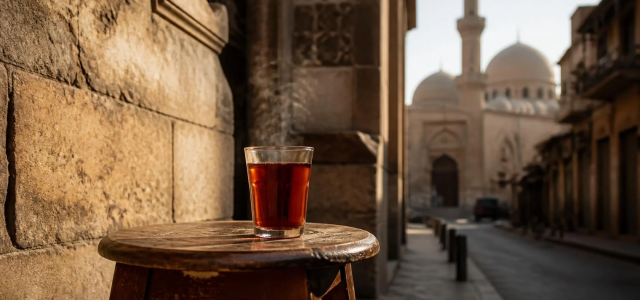
Somebody I know once wrote that she’d lived in Cairo for two years on her CV. It had been eight months. Her reasoning was that nobody would check, and the job wanted “deep regional experience.” She got the interview. Then the interviewer, a very nice man, asked her what her favorite neighborhood had been in her second winter there, and she sat in the silence of someone who has never had a second winter anywhere.
She laughs about it now. She didn’t get the job, and she says it was the best thing that could have happened, because she’d lie awake for months worrying about being found out.
That’s the practical version of why lying is forbidden. The religious version is stronger.
What kidhb means
Kidhb is lying, saying something you know to be false, or presenting something false as true. It includes what you say, what you write, what you imply by silence when speaking up was your duty, and what you sign your name to.
In Islam honesty isn’t a decoration on a good character. It’s close to the center of it. The Quran tells believers to be with the truthful, in Surah At-Tawbah.
What the hadith say
There’s a well known hadith in Bukhari and Muslim. Truthfulness leads to righteousness, and righteousness leads to paradise. A man keeps telling the truth until he’s recorded with Allah as a truthful person. Lying leads to wickedness, wickedness leads to the Fire, and a man keeps lying until he’s recorded with Allah as a great liar.
The word “keeps” is doing a lot of work. It’s about habit. Nobody wakes up a liar. It’s a series of small decisions, each easy.
Another hadith, also in Bukhari and Muslim, lists the signs of a hypocrite, and the first is that when he speaks, he lies. And one that hits hard in the age of group chats, a man who lies to make people laugh gets a warning of destruction, three times, narrated in Abu Dawud and Tirmidhi.
Jokes, exaggeration and white lies
The Prophet joked, but he said he only said the truth while joking. So jokes are fine, lies dressed up as jokes are not.
White lies are harder. “I love the gift,” “I’m five minutes away,” “I’m fine.” Scholars are strict on the principle, and the safer path is to find something that is true to say. You can say “thank you so much for thinking of me” without saying you love a gift you hate. That works more often than people expect.
Same for children. Promising a child a treat you won’t give is lying, and there’s a hadith in which the Prophet warned a mother about exactly that, as reported in Abu Dawud.
The exceptions
Scholars discuss a small number of situations where saying something untrue is permitted, taken from a narration in Sahih Muslim, namely to make peace between people, in war, and between spouses in the sense of expressing affection. Scholars explain these narrowly. Reconciliation means you can pass along a good word and hold back a bad one, for example, and you shouldn’t use it to cover any wrongdoing. It is not a loophole for a CV.
If you’re ever in a real situation, such as protecting someone from harm, speak to a knowledgeable scholar. Most of the time, a truthful way out exists, through implication or by saying less.
Why it’s such a big deal
Trust is what holds a community together. A society where nobody can believe anything can’t function, can’t trade, can’t even pass on religion. That’s why false testimony is listed among the major sins, and why a liar’s narration of hadith is thrown out by scholars of hadith, who built a whole science around checking who said what.
Also it eats you. Liars need a good memory, as the old saying goes. You have to hold two versions of reality in your head.
Practical habits
Say “I’m not sure” more. Check before you share, especially news and forwarded messages, because spreading something false without checking counts for you too, as the hadith says it’s enough of a lie for a person to narrate everything he hears. Keep your word on small things too. And watch the gossip, since it and lying so often travel together, which our post on backbiting in Islam explains.
If you’ve lied, repent, return what you took, correct the record. Tawbah applies here like anywhere else.
And think about the people around you. Our post on the rights of neighbors in Islam shows how much of Islamic character is simply being someone others can trust.
Conclusion
My acquaintance now keeps her CV annoyingly accurate. She puts “eight months” and then lists everything she learned in them, which is, to be fair, more interesting than a lie would have been. Honesty turned out to be a better pitch. If you’d like to learn Arabic and Islamic studies in a place that takes character seriously, you can find us at Studio Arabiya.
The scholars who checked every hadith chain for honesty did it in Arabic, and if you’d like to read those sources the way they did, our Arabic Immersion program in Cairo is a good place to start.
FAQs
Is lying ever allowed in Islam? Scholars mention a few narrow cases from a hadith in Muslim: reconciling between people, war, and between spouses in the sense of showing affection. They interpret these tightly. It’s never a loophole for gaining something or hiding wrongdoing.
Are white lies haram? Scholars lean strict and say to look for something true you can say instead. You can thank someone for the thought without claiming to love a gift you don’t. Small lies grow into habits, and that is the real worry in the hadith.
What should I do if I’ve lied? Stop, ask Allah for forgiveness, and correct it if you can, especially if somebody was harmed or misled. Make a firm decision not to repeat it. Tawbah is accepted for lying like any other sin, so don’t be discouraged.